

What a Feature Film Cinematographer Does
Industry · Glenn Hanns ACS · SydneyA feature film cinematographer is rarely hired for camera knowledge alone. Producers and directors are usually assessing something more decisive — whether the cinematographer can carry the visual logic of a long-form narrative from script breakdown through to the final day of principal photography, without losing discipline, taste or momentum.
That distinction matters on features. A strong image is not enough if it cannot be sustained across weeks of shooting, shifting locations, compressed schedules and the practical demands of performance, design and post. The role sits at the meeting point of story, leadership and execution.
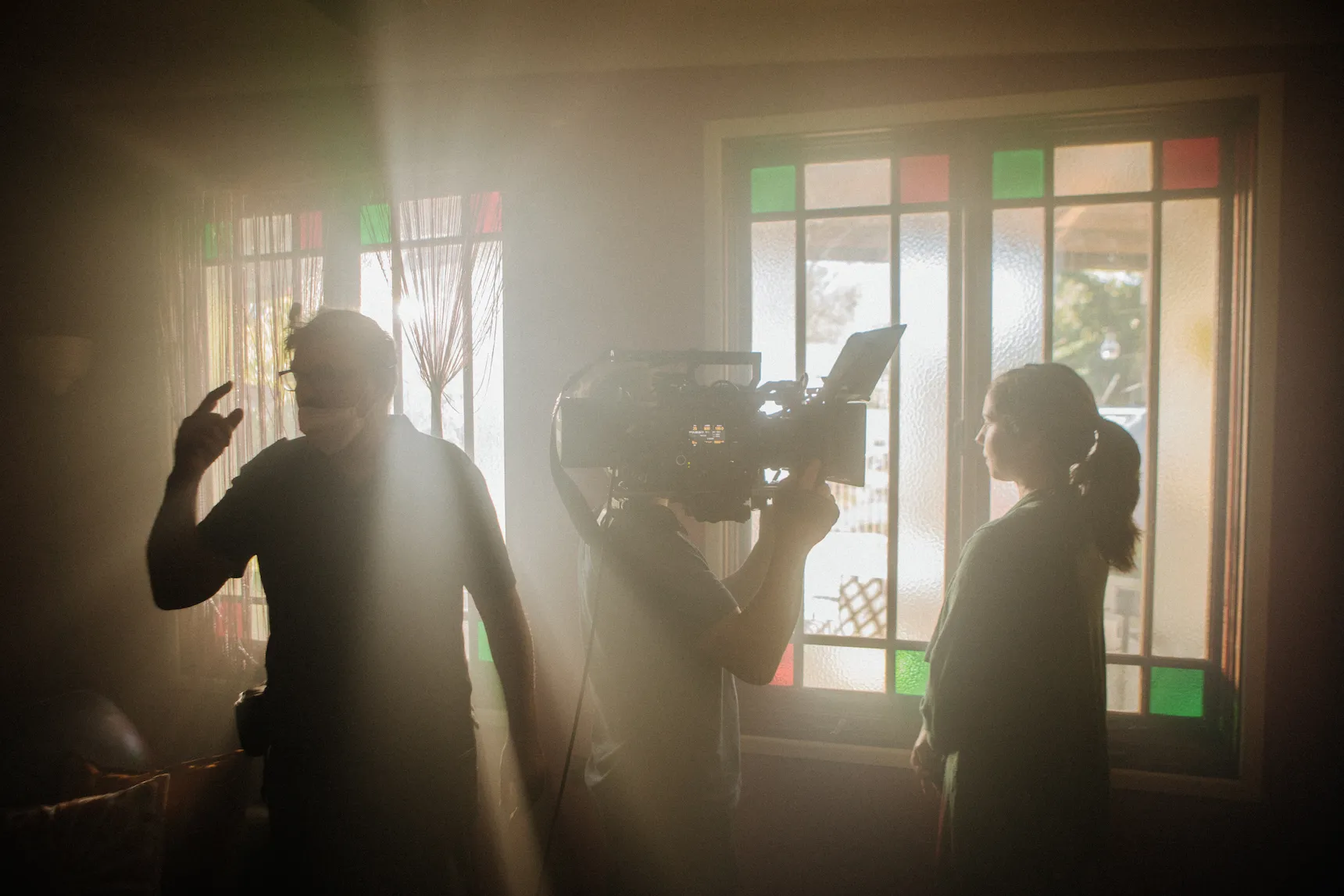
What a Feature Film Cinematographer Is Responsible For
On a feature, cinematography is not the act of making isolated shots look impressive. It is the construction of a complete visual system for the film. That system includes lensing, camera movement, contrast, colour separation, exposure strategy, coverage philosophy and the relationship between image and performance.
The cinematographer translates the director's intent into visual terms that can be repeated and protected under production pressure. In practical terms, that means developing a coherent approach early, then applying it with enough flexibility to accommodate location changes, schedule losses, weather shifts and the realities of actors, crew and budget.
A feature film cinematographer is also leading a department. The work involves managing the camera and lighting teams, aligning with the first assistant director's schedule, working closely with production design and costume, and making constant judgement calls about where the screen value lies in each setup. Some days that decision is about scale and atmosphere. Other days it is simply about preserving the time required for a key dramatic beat.
Visual Storytelling Over Surface Style
The best feature work tends to come from decisions that are motivated by story rather than decoration. A frame can be highly controlled and still feel alive. It can also be technically polished and dramatically empty.
That is why the early conversations matter. Tone, perspective and narrative rhythm are established well before the camera package is finalised. Is the film psychologically close or observational? Does movement feel earned, or should the frame hold its ground? Should night interiors carry softness and intimacy, or tension and separation? These are not abstract preferences. They determine how the audience reads character and space.
Features also demand restraint. A visual idea that is strong in a proof-of-concept or music video may become repetitive over 100 minutes. The job is not to impose style scene after scene. It is to shape an evolving visual language that gives the story room to escalate, contract and turn.
The Feature Film Cinematographer in Prep
Prep is where the real work begins. By the time a feature reaches set, most of the critical cinematography decisions should already be in motion. Script analysis, location recces, equipment tests, LUT development, discussions with design departments and scheduling conversations all sit inside this phase.
For producers, this is often where confidence is earned. A cinematographer who can identify risk early is not being conservative. They are protecting the film. That may mean flagging that a location is too small for the intended coverage, that a night exterior will need more rigging time than the schedule allows, or that a proposed visual device is going to create continuity problems across multiple shooting days.
For directors, prep is where alignment either becomes precise or remains vague. The strongest collaborations usually move past reference images quickly and into something more exact — why a scene should be seen a certain way, how the camera should behave around a character, when to withhold scale, and when to let the frame open up.
This is also where taste becomes measurable. A cinematographer's contribution in prep is not just technical planning. It is judgement.
Camera, Lenses and Format Are Not Neutral Choices
There is a tendency in some conversations to reduce cinematography to package selection. Camera body, lens set and filtration matter, but only in relation to the dramatic aims of the film.
A cleaner digital image may suit one project and work against another. Vintage glass can introduce texture and instability, but if the story requires a more rigorous visual discipline, that character may become a distraction. Large format can create a certain intimacy and spatial rendering, yet it also changes blocking, set coverage and focus demands. Every choice carries consequences.
The point is not to chase a fashionable look. It is to select tools that support the narrative and remain workable across the realities of a feature schedule.
Collaboration on Set
Once principal photography begins, the cinematographer becomes one of the central stabilising forces on the floor. Good set work is not loud. It is precise, calm and readable.
A feature set moves on trust. Directors need to know that the visual plan is being protected. Producers need to know that time is being used intelligently. Actors need an environment where technical adjustments do not erode performance. Crew need clear priorities. A cinematographer who can maintain that balance is doing far more than lighting scenes.
This is especially true in drama. Performance often asks for speed, sensitivity and selective compromise. There are moments when the ideal lighting refinement is less valuable than preserving an actor's energy. There are also moments when taking another ten minutes for shape and contrast materially improves the scene. Knowing the difference is part of the craft.
Coverage strategy plays a major role here. Some films benefit from highly designed shot construction with limited coverage. Others need flexibility in the edit. Neither approach is inherently superior. It depends on the director, the script, the schedule and the intended rhythm of the cut. The cinematographer's role is to help define that strategy and execute it without confusion.
Lighting for Continuity and Emotional Control
Lighting on a feature is often judged by its beauty, but beauty is only one measure. Continuity, control and repeatability are just as important.
Long-form storytelling requires images to cut together across time. A scene may be shot over several days, in changing weather, with partial windows of access to a location. The cinematographer has to create a lighting methodology that survives those conditions while still feeling natural within the world of the film.
That methodology differs project to project. Some productions favour a more pre-rigged, controlled environment. Others require a lighter footprint and a faster response to available conditions. There is no virtue in overbuilding if the film does not need it. Equally, under-preparing a technically demanding sequence can cost far more once the day begins to slip.
The strongest feature cinematography often comes from this balance — enough design to remain consistent, enough agility to remain alive.
Why Producers Look Beyond the Reel
A reel can demonstrate taste, scale and technical finish. It cannot fully show how a cinematographer behaves across a six-week or ten-week feature.
For producers and production companies, the hiring decision usually extends beyond image quality. Can this person prep properly? Can they lead crew well? Will they collaborate with design and post without friction? Do they understand where to push and where to simplify? Can they protect the standard of the film without becoming a problem for the schedule?
Those questions matter because a feature is an endurance form. Reliability is not separate from artistry. It is part of it.
The basics at its core
1. Pre-Production (The Planning Phase)
- Visual Concept: Reads the script and breaks down the visual requirements scene by scene based on the directors vision to create the "look" or colour palette that sets the mood and tone for the film.
- Recce (reconnaissance): Scouts locations with the director to determine where scenes will be shot, natural lighting conditions, and camera angles, logistics and serviceability.
- Script Breakdown/planning: Creates a shot list and/or storyboards to map out camera movements and blocking.
- Liase with HOD's (Heads Of Departments): Collaborates heavily with the production designer and costume designer to ensure the sets and wardrobes match the visual palette of the film.
Equipment selection/testing: Configures and tests camera settings (e.g.,ISO, shutter speed, codec) for optimal exposure as well as lens tests for performance, they could also shoot lens tests in rental bays or even on locations with the actors and wardrobe.
Crewing: Can have ability to pick HOD's or lower crew if needed.
2. Production (The Shooting Phase)
- Works with director: Collaborates with the director during rehearsals to block actors and decide how a scene will be covered with different shots.
- Lighting execution: Oversees the crew on set to ensure lighting is properly placed and shots are safely and accurately executed under tight production schedules.
- Department Management: Liase with HOD's to ensure vision is executed as directed.
- Project Management: Deal with technical logistical time and managerial issues from equipment, environment or people.
3. Post-Production (The Finishing Phase)
- Colour grading: Works alongside a colourist during the final colour grading to ensure the contrast, colour balance, and saturation of the final film perfectly match the original visual intent.
- VFX Supervision: Collaborates with the VFX team so that the on-set lighting and camera data match what is needed for digital compositions.
- Project Delivery: Completes a QC over the whole film before delivery.
That is one reason established screen work carries weight. Awards, ACS accreditation, major credits and formal training do not replace the work itself, but they do indicate a level of professional consistency. For decision-makers managing finance, delivery and creative risk, that consistency has practical value.
Choosing the Right Cinematographer for a Feature
The right fit is not always the most visually aggressive candidate. Sometimes it is the cinematographer whose instincts are most aligned with the material and whose process best suits the production model.
A contained drama may need a very different hand from a stylised genre feature. A first-time director may benefit from a cinematographer with a particularly strong prep process and communication style. A tightly financed production may need someone who can scale ambition intelligently rather than simply describe an ideal version of the shoot.
This is where experience on narrative work matters. Feature production exposes every weak assumption. If the visual concept cannot survive the schedule, it was never really a concept for that film.
For producers, directors and commissioning teams, the useful question is simple: can this cinematographer turn the screenplay into a consistent, cinematic piece of work under real production conditions?
That is the standard. And when the answer is yes, the images tend to carry more than polish. They carry authority, intention and dramatic weight.
If you are assessing a feature film cinematographer, look past individual frames and consider the larger proposition — story judgement, set leadership, visual consistency and the ability to hold a film's identity from prep to wrap.
Glenn Hanns ACS is a Sydney-based Director of Photography specialising in feature drama, television and documentary. View his showreel, read more on how to hire a feature film cinematographer, or get in touch via the contact page.