

Crafting an Outback Odyssey: The Cinematography of Moon Rock For Monday
Feature Film · Glenn Hanns ACS · 2020There is an old saying among directors of photography that the environment is your most unpredictable character — especially when you step out of the studio and into the vast expanse of the Australian outback. Capturing that endless horizon while maintaining a deeply intimate connection between your actors is a tightrope walk.
On the award-winning feature Moon Rock For Monday, I teamed up with long-time creative collaborator Kurt Martin to do exactly that. The film — which follows an unlikely alliance between a young girl and a fugitive teenager chasing a healing moon rock — picked up a Gold Award at the ACS NSW & ACT Awards in 2021, followed by an Award of Distinction at the National ACS Awards in 2022 for feature films under a $2m budget, and an AACTA nomination for Best Cinematography.
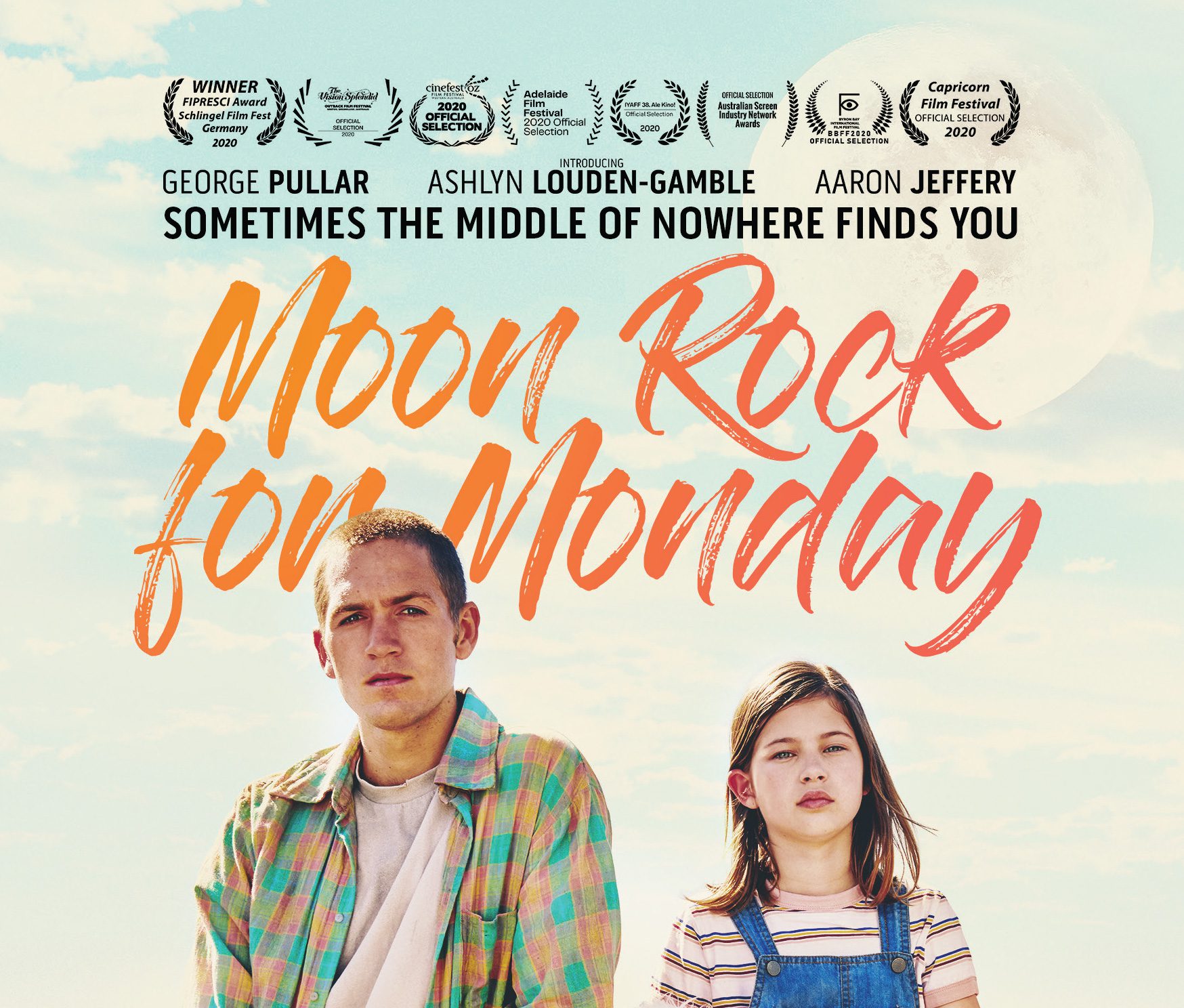
The Canvas: Formats, Crops, and the Cooke Look
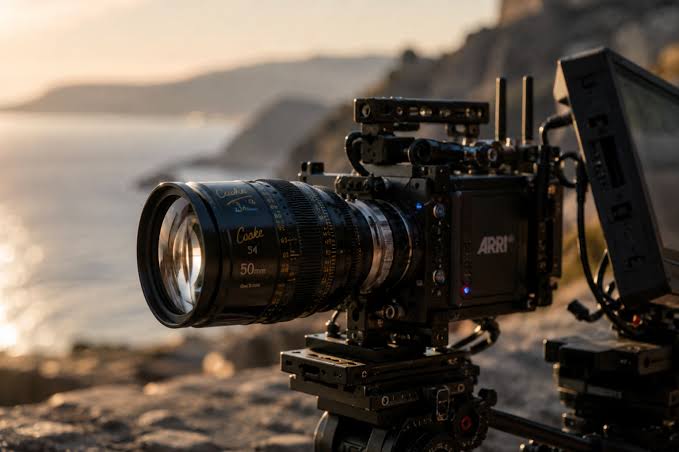
When shooting a road-trip narrative through wide landscapes, the instinct might be to reach for traditional anamorphic glass. For this project however, I opted for a calculated structural approach: capturing in 4K UHD on the ARRI Alexa Mini and implementing a hard 2.35:1 anamorphic crop in post-production.
The camera choice provided that coveted, organic Alexa sensor roll-off, but the real magic lay in the lens selection. I paired the sensor with a classic set of Cooke S4 prime lenses. While modern lenses can sometimes feel clinically sharp, Cooke glass is legendary for its roundness, gentle skin rendering, and a smooth, cinematic bokeh roll-off. This ensured that despite the harsh, unforgiving nature of the desert location, the texturing of human faces remained soft, organic, and grounded in emotional truth.
Manipulating Depth: Creating an Otherworldly Space
One of the standout achievements of the film is how it transitions into the stylised, dreamscape quality required for the moon-scape sequences. To achieve an ethereal feel under the bright Australian sun, I utilised a technique that demands serious precision on set — stacking heavy external neutral density filters on top of the Alexa Mini's internal ND system, stripping away stops of light to force the lens wide open to an ultra-shallow T1.4.
Stacking ND filters allows the operator to maintain a cinematic shutter angle while opening the aperture completely, compressing the depth of field to mere millimetres in broad daylight.
This dramatic depth compression served a dual narrative purpose:
- Isolation — It physically isolated the children and the moon rock from their surroundings, creating a private world within the vast landscape.
- Spatial Tension — Using the widest Cooke S4 at T1.4 exaggerated the immense scale and emptiness of the background while keeping the leads intimately framed in sharp relief against a creamy, impressionistic fall-off.
For the disorienting car accident flashbacks, I pivoted to a Lensbaby optic, combining it with an off-speed frame rate of 30fps played back at the standard 24fps. This subtle overcranking created a slightly slowed, glitchy temporal sensation — mirroring the fractured nature of memory and trauma.
Lighting the Outback Night
Night exteriors in remote areas present a classic cinematographer's paradox: how do you light the darkness without making it look artificially lit?
The solution combined massive scale with practical intimacy. For the overhead ambient key, I floated a 4K helium lighting balloon at maximum height. Dimmed down significantly, it cast a faint, cool, moonlight-mimicking wash across the desert floor. Often DOPs fear the darkness and compensate by running overhead units at 100%. The trick here was to bring the HMI fill down to our main key fire level by 2 stops — creating a natural balance between ambient and source.
To contrast this cool overhead ambient, a real campfire provided warm interactive tones on the actors' faces. To gain absolute exposure control without sacrificing the unpredictable texture of live fire, the team augmented the campfire with a custom gas rig burning underneath actual wood logs — giving us the ability to dial the flame height instantly while maintaining complete visual authenticity. The complex starfields were shot as clean, static plates on location and seamlessly composited in post-production.
| Setup | Source | Purpose |
|---|---|---|
| Overhead Key | 4K helium balloon, dimmed | Cool moonlight wash across desert floor |
| Interactive Fill | Gas-augmented campfire under real logs | Warm, controllable face light with authentic texture |
| Background | Static star plates composited in post | Clean, uncompromised night sky |
| Day scenes | Heavy overhead silk skims | Softened harsh midday Australian sun on exteriors |
The Director–Cinematographer Partnership
Behind every great visual style is a functional creative partnership. My shorthand with Kurt Martin spans several projects including short films Narcititis and The Briefcase for Lunar Pictures. Kurt and I first crossed paths through a mutual friend, and the partnership clicked instantly — same sense of humour, same shortlist of director–cinematographer pairings we'd both been quietly obsessed with for years.
Kurt is a strongly visual director but likes to hand over the keys early, preferring to see what I bring before he commits to a look. On Moon Rock For Monday that meant multiple scouts of the outback to find the right country, time of day and shoot schedule. Filming there in the warmer months pushed temperatures to the extreme — so we structured most days around controlled interiors at midday and used heavy overhead skims to soften the high sun on exteriors.
What I love about working with Kurt is the room he leaves for the process. Giving him space to discover things on set keeps him responsive to the environment and to the actors — and he's exceptional at both.
He's particularly gifted at reading people: at seeing what holds true for a performer and chasing it. That means the camera has to stay flexible and ready to follow rather than dictate. His willingness to be led by the room, and mine to be led by him, is what makes the work feel honest.
Awards & Recognition
- ACS Gold Award NSW & ACT — Feature Films under $2m, 2021
- ACS Award of Distinction National — Best Feature Film under $2m, 2022
- AACTA Nomination — Best Cinematography, 2021
- Schlingel Film Festival (Germany) — Jury Prize + FIPRESCI Prize
- Zurich Film Festival (Switzerland)
- Beijing International Film Festival (China)
- Adelaide Film Festival (Australia)
The film received worldwide digital distribution through Netflix, Amazon Prime, Apple TV, Foxtel, ABC and SBS.
Glenn Hanns ACS is a Sydney-based Director of Photography specialising in feature drama, television and documentary. View the Moon Rock For Monday showreel or get in touch via the contact page.